


A dairy cooperative in Bahati asked me last year why its website vanished the week the milk cheque was due. The host had suspended the account, and the renewal notice had gone to an address nobody at the cooperative had ever opened.
That is how hosting in Nakuru actually gets judged. Not by gigabytes on a plan page, but by whether the account is in your name, whether the invoice reached the person who pays it, and whether anyone answers when a lorry is waiting on the A104.
So this one is for the businesses I keep meeting in town: the agrovet near the bus stage, the clearing agent down from the station, the lodge out at Naivasha, and the supplier chasing county tenders every January. If you are collecting hosting in Nakuru quotes, the order below is the order that matters.
What hosting in Nakuru has to do for your business in 2026
Most hosting in Nakuru conversations start with the wrong question, which is “how much”. The better question is what the site has to do, because that answer decides the plan.
In this county I see three jobs.
Tender prequalification. A county or parastatal tender usually asks for a company profile, a KRA PIN certificate, and somewhere to look you up. A supplier with no website sends a PDF and hopes; one with a working site sends a link and gets called back.
Capturing a short, sharp season. Harvest payments, school opening, the tourist months around the lake, and the flower-farm contract cycle all produce weeks where enquiries triple and then go quiet.
Talking to people who are not in town. A cooperative with members in Njoro, Molo and Rongai cannot post a notice on a wall. A page and a mailing list reach all of them at once.
None of those three needs a big server, which is the honest answer to most hosting in Nakuru price questions. All three need a site that stays up, loads on a phone, and has an address that looks like a real business.
The Nakuru economy your website is selling into
Nakuru became a city in December 2021, the fourth in Kenya after Nairobi, Mombasa and Kisumu. That matters less for prestige than for what it signals: a county with its own revenue system, licensing rules and a business community worth selling hosting in Nakuru to.

The county government puts Nakuru at nearly six percent of national GDP and calls it Kenya’s second-largest county economy, with services at roughly half of output, industry about a quarter, and agriculture around a fifth. It also says more than eighty percent of households depend on farming directly or indirectly, which is why so much of the local economy is one harvest away from a good or a bad year.
Dairy is the clearest example. The county’s own 2026 figures put last year’s milk output at over 326 million litres, worth about Ksh 14.6 billion, collected through 27 active cooperatives with more than 54,000 members. Add the flower farms around Naivasha, the maize and potato belts towards Molo and Subukia, and the cattle country in Bahati, and you have a county whose business calendar follows rainfall and market day.
Two more facts shape what hosting in Nakuru has to survive. The A104 runs straight through town as the Kenyan leg of the Northern Corridor that carries cargo from Mombasa to Uganda, Rwanda, Burundi, South Sudan and eastern Congo, and the old metre-gauge railway still passes through with a branch to Kisumu. Freight and fuel move through this town all day, which is why logistics firms here run websites that get checked at odd hours by drivers and dispatch clerks.
Registering a .co.ke from Nakuru
The .KE namespace is run by KeNIC, a non-profit licensed by the Communications Authority, and you register through an accredited registrar rather than with KeNIC directly. The rules are national, not county-level, so nothing about hosting in Nakuru changes because your business sits on Kenyatta Avenue instead of Kimathi Street.
For a commercial name there is no paperwork at all. Documents are only needed for .go.ke, .ac.ke and .sc.ke, where proof of government or education status is required.
Three habits are worth forming.
Put the cooperative or company on the registrant line, not the person who built the site. I have watched a Rongai agrovet pay twice for the same website because the domain sat in a freelancer’s account. The name on the invoice and the name on the registrant record should match.
Use a mailbox the business controls, not a personal one. Renewal notices go to the registrant email. When the treasurer changes, that address should not change with them.
Check what address you registered. A PO Box is fine and most small businesses use one, but the registrant record should be an address that still reaches you in three years.
Our .co.ke is Ksh 999 in the first year and Ksh 1,500 on renewal, and annual hosting in Nakuru plans include it for the first year. The step-by-step registration guide covers the form fields that decide who really owns the name.
Paying for hosting in Nakuru by M-Pesa
The county itself settled this argument years ago: its Finance Act allows county charges to be paid by mobile money transfer, bank, bank agent or county card. Hosting in Nakuru should work the same way. Every invoice we send carries a Paybill number and an account number, and the account number is the part that matters, because that is what ties the money to your invoice.
Buy Goods works too, but a till number has no field for an account, so the payment lands as an unnamed credit and someone has to match it by hand. That is the commonest reason hosting in Nakuru activates a day late.
Pay annually for hosting in Nakuru if you can. M-Pesa has no standing order, so twelve monthly payments are twelve chances to forget, and a suspended site during harvest week costs more than the plan did.
Keep the transaction code. If a payment has not reflected in fifteen minutes, send the code, the amount, the invoice number and a screenshot, and the M-Pesa guide explains what happens between those four things and an active account.
The permit, the tender, and the invoice
If you sell to the county, three documents decide whether your website is a help or a distraction.
The first is the Unified Business Permit. Nakuru rolled it out in 2025 after amending its Finance Act, replacing the stack of separate permits a business used to carry. One licence, one renewal date, which is a good deal easier to keep straight than five.
The second is the national rule behind it. Under the County Licensing (Uniform Procedures) Act 2024, a county runs a single application that can cover several licences, a licence for a year-round business runs for one year, and an application a county has not decided within 28 days is treated as approved.
The third is the invoice, and this is where hosting in Nakuru goes wrong quietly. Tenders and county payments usually ask for a KRA PIN on your paperwork, and since eTIMS the expectation is an electronic tax invoice rather than a receipt in someone’s name. Ask your host two questions before you pay: will the invoice carry my company name and KRA PIN, and is it an eTIMS invoice.
What Nakuru businesses actually buy
This table is roughly what hosting in Nakuru looks like in our order book each month.
| The business | What they actually need | What fits |
|---|---|---|
| Dairy cooperative, Bahati | Member notices, milk payment dates, a contact form | WordPress 899/yr + 2 mailboxes |
| Agrovet or farm input dealer | Product list, price enquiries, directions | Starter 19,999 + email 599/yr |
| Logistics or clearing firm | Tracking info, quote requests, a fast site | Business 35,000 + shared hosting |
| Lodge or guest house, Naivasha | Rooms, rates, booking enquiries, photos | Business 35,000 + email |
| School or college | Fees structure, downloads, term dates | Shared Business at 2,999/yr |
| County supplier | Profile, certificates, contact page | WordPress 899/yr + .co.ke |
| Hardware or building supplies | Catalogue, delivery area, WhatsApp | Starter 19,999 + email |
| Flower farm contractor | Credibility page for buyers abroad | Business 35,000 + cloud from 599/mo |
The first message from anyone buying hosting in Nakuru usually contains the same three questions: how much, can I pay by M-Pesa, and will the domain be in my name. The answers are the price page, yes, and yes.
The ones who outgrow it are cooperatives publishing member documents, schools running a downloads page, and anyone whose site has become the front door rather than a business card.
The seasonal spike nobody plans for
Here is the pattern I wish more Nakuru businesses understood before the busy week arrives. The site is fine for eleven months, then the harvest payment lands, everyone in the county opens the same page, and it crawls. It is the hosting in Nakuru decision that costs the most money.
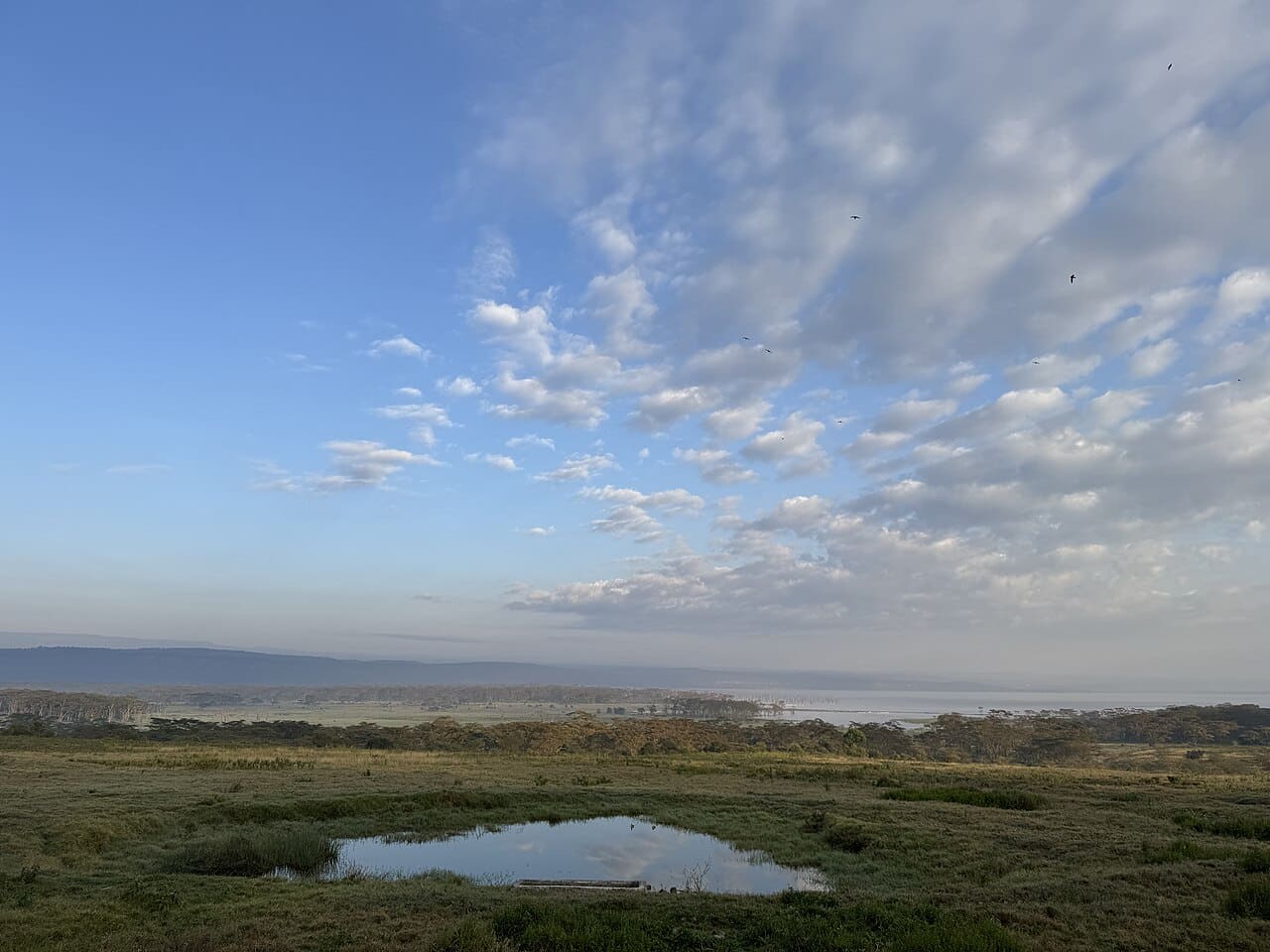
Four things decide how hosting in Nakuru feels on a phone, and only one of them is the host. Where the server sits, whether caching is switched on, whether the images were sized for a phone, and whether PHP is a current version. A booking page carrying six 5MB photos straight from a camera will feel slow on any server in the world.
Two checks on your own hosting in Nakuru you can run yourself. Load your site on mobile data, not office wifi, at seven in the evening. Then look at the page weight of the homepage, because in my experience most “slow hosting in Nakuru” complaints end at an unsized image, not at the data centre.
What we control is the stack: NVMe storage, LiteSpeed with caching, free SSL on every domain, and a current PHP version, on shared and WordPress plans alike. What nobody can control is the mobile network at five in the afternoon on the Nakuru–Nairobi road.
Support when the office is closed
East Africa Time is UTC+3, and that single fact rules out a lot of providers. A team on Central European Time closes at 5pm their day, which is 7pm here, so a Friday evening problem waits until Monday lunchtime.
Ask three questions of anyone selling hosting in Nakuru: who answers at 9pm on a Saturday, in which language, and on which channel. Ours is 24/7/365 staffed in Kenya, in English and Swahili, with the ticket history kept on the account so nobody has to explain the same problem twice.
WhatsApp matters here more than it does in most markets, because it is how a shop in Gilgil actually reports a broken checkout. A provider that only accepts email has chosen a slower channel than its customers.
A checklist before you pay a Nakuru host
Six questions for anyone selling hosting in Nakuru, one email, and most of the bad outcomes disappear.
- Is the domain in the business name? Check the registrant contact in a whois lookup before you pay the balance.
- Is there a Paybill with an account number? Card-only billing creates a currency question at year end.
- Will the invoice carry my KRA PIN, and is it eTIMS? Ask before the money moves, not after.
- What does year two cost? Hosting, domain, mailboxes and support, in shillings, on paper.
- Who answers at 9pm, in what language? Support hours in EAT, not in the provider’s local time.
- Can I leave? A panel you can log into, a database you can export, and a domain you can move are the only real guarantees.
The short version
Hosting in Nakuru should come with a Kenyan domain, a shilling invoice, a Paybill number, a support queue in your time zone, and accounts in the business name. A Nairobi street address on the provider’s website is not one of those five things.
Our shared plans start at Ksh 1,999 a year with a free .co.ke in the first year, WordPress hosting at Ksh 899, and the domain renews at Ksh 1,500. If you also sell in the capital, the Nairobi guide covers the same decisions from the other end of the A104.
Frequently asked questions
Do I need a .co.ke to sell to Nakuru County? No rule says so, but tenders ask for a company profile and a contact address, and a .co.ke plus a working site is the cheapest credibility you can buy. It also tells a county officer that the business is registered here.
Can I pay for hosting in Nakuru monthly? Some providers allow it, but annual billing is cheaper and easier to remember. With M-Pesa there is no standing order, so every extra billing cycle is another chance to forget a payment.
Do I need a physical office to host a website? No. A PO Box and a phone number are enough for registration and billing, and plenty of hosting in Nakuru customers trade that way. What you do need is an address that still reaches you at renewal time.
Will a Nairobi data centre be slow for Nakuru visitors? Not measurably. Nairobi to Nakuru is a short hop on fibre, and the delay is a few milliseconds, far less than an unsized image adds. Latency to Europe is the one that shows up on a phone, which is why hosting in Nakuru from a Kenyan provider feels different in the evening.
Related reading
- Web hosting in Nairobi — the same buying decisions, from the capital’s side of the corridor.
- How to register a .co.ke domain in Kenya — the form fields, and who should be the registrant.
- Paying for hosting with M-Pesa — Paybill, Buy Goods, and what to keep as proof.
- Web hosting prices in Kenya 2026 — every provider’s entry price, dated.
- How much does a website cost in Kenya? — the build, the domain and the year-two renewal in one table.
- Web hosting in Kisumu — the port, the fisheries and the rice schemes, and what they need from a website.