
A clinic in Kilimani asked me last month why its .co.ke was registered in the web designer’s name. The site worked, the email worked, and the domain belonged to someone else.
That problem never appears in a comparison table, and it is why buying hosting in Nairobi is not the same as buying it from a page that charges a card in dollars.
Local, in this market, is five concrete things: a domain you own, a way to pay in shillings, an invoice your accountant can file, support in your time zone, and someone who answers at 9pm on a Saturday. Those five are what hosting in Nairobi should mean.
What local actually changes when you buy hosting in Nairobi
The word gets used loosely, so here is what it means in practice, and what it does not.

- The domain is Kenyan. .co.ke is administered from Nairobi by KeNIC, and a Kenyan business address on the invoice matters to customers who check.
- The payment is Kenyan. M-Pesa Paybill with an account number, in shillings, with no currency conversion and no card needed.
- The invoice is Kenyan. Your company name, your KRA PIN, VAT shown as its own line, and an electronic tax invoice if your accountant needs one.
- The clock is Kenyan. East Africa Time is UTC+3. A support team in Europe closes at 5pm their time, which is 7pm here.
- The account is yours. Domain, hosting and mailboxes in your name, with your email on them, so nobody can hold your business hostage.
What local does not mean: a Nairobi office address is not a Nairobi server. Ask any provider where the data centre actually is, and ask them to say it in writing.
Registering a .co.ke when your business is in Nairobi
The .KE namespace is run by KeNIC, a non-profit licensed by the Communications Authority. You do not register with KeNIC directly; you register through an accredited registrar, which is what we are.
The good news for a Nairobi business is that the domain behind most hosting in Nairobi needs no documents at all. Requirements exist for .go.ke, .ac.ke and .sc.ke, where proof of government or education status is required, but a commercial name is open to any person or company on a first-come basis.
Three details decide whether this goes well.
Register it in the business name, not the developer’s. Handing the domain to whoever sold you hosting in Nairobi is how that happens. I have watched a business pay for a rebuild because the freelancer who registered the domain in 2021 stopped answering. Recovery is possible, but it is slow and it costs more than the domain did.
Use an email address the business controls. Renewal notices go to the registrant contact. If that address belongs to a former employee, the first you hear about expiry is when the site goes dark.
Know the cliff. A .co.ke runs on a one-year term. Miss the renewal and there is a short grace period, then a redemption phase, then the name returns to the pool for anyone to buy. It is the only part of hosting in Nairobi that expires on a date you have to remember.
Our price is Ksh 999 in the first year and Ksh 1,500 on renewal, and the same figure appears on the domain page beside 32 other extensions. If a quote for hosting in Nairobi is much cheaper than that, ask which year the price applies to.
Paying for hosting in Nairobi by M-Pesa
Every invoice we send carries a Paybill number and an account number, and the account number is the part that matters.
Paybill links the money to your invoice. Buy Goods does not, because a till number has no field for an account, so the payment arrives as an unnamed credit and someone has to reconcile it by hand.
The smoother option is the checkout prompt: you click pay, M-Pesa asks for your PIN, and nothing gets typed twice. Fewer keystrokes means fewer mistyped invoice numbers, which is the commonest reason hosting in Nairobi activates late.
Two habits save money on hosting in Nairobi. Pay annually, because twelve reminders a year is twelve chances to forget, and M-Pesa has no standing order to fall back on. Keep the transaction code, because it is the only thing support can act on quickly.
If a payment has not reflected in fifteen minutes, send the code, the amount, the invoice number and a screenshot. The M-Pesa guide walks through what happens between pressing pay and the account activating.
The invoice your accountant will ask for
Kenyan tax paperwork has moved, and hosting invoices moved with it.
eTIMS applies to businesses. KRA’s own guidance says all persons engaged in business are required to onboard eTIMS and issue electronic tax invoices. There is a concession for small traders whose turnover is under Ksh 5 million, where the buyer can raise the invoice through KRA’s buyer-initiated route, but the direction of travel is electronic invoices for everyone.
So when you buy hosting in Nairobi, ask two questions before you pay: will the invoice show my company name and KRA PIN, and is it an eTIMS electronic tax invoice. If your accountant files VAT, also confirm the 16% is shown as its own line rather than folded into a total.
Two things that are not invoices. A screenshot of an M-Pesa SMS proves you paid; it does not let you claim the expense. And a receipt in a personal name against a company PIN creates a reconciliation question every January.
What Nairobi businesses actually buy
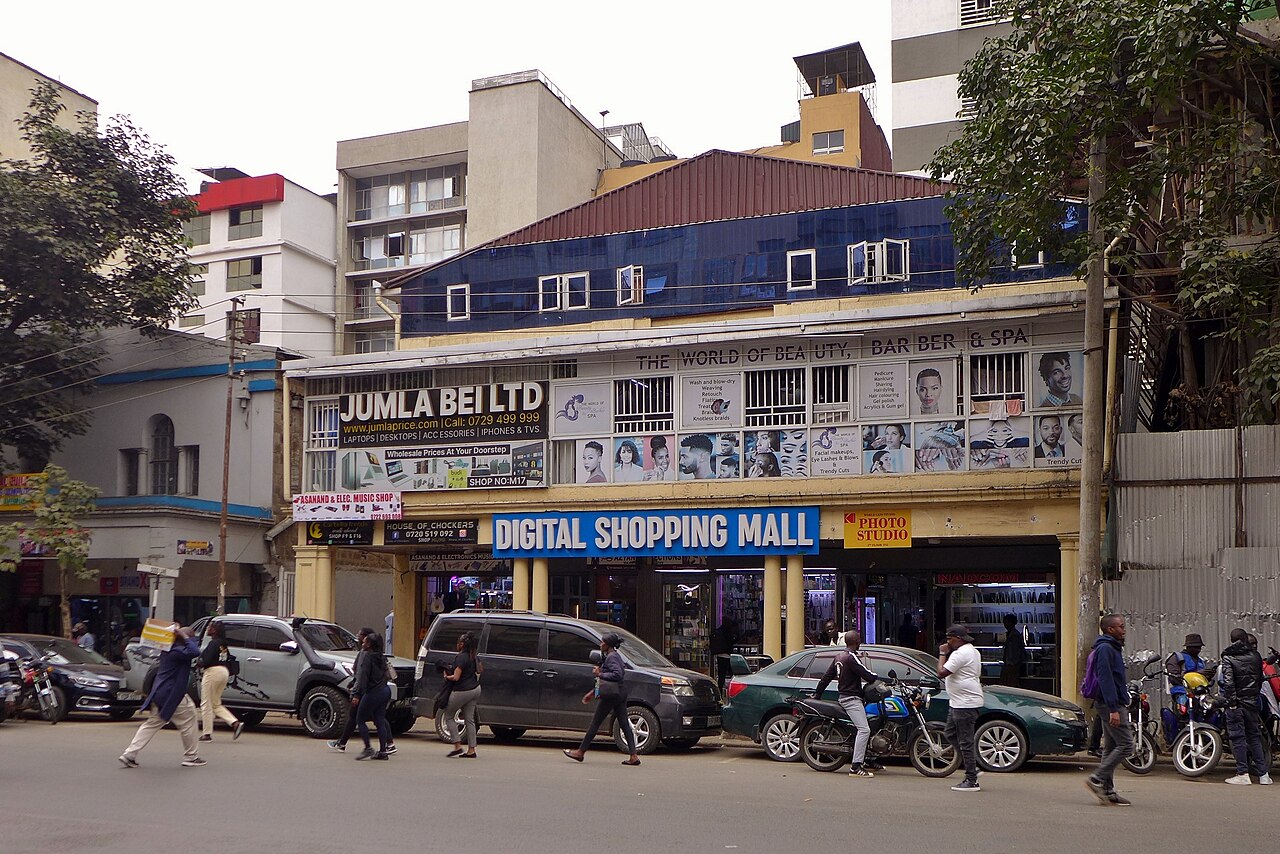
After enough conversations about hosting in Nairobi, the patterns are clear. The table is roughly what we sell each week.
| The business | What they actually need | What fits |
|---|---|---|
| Clinic in Kilimani | Five pages, a booking form, WhatsApp | Starter 19,999 or Business 35,000 |
| Law firm in the CBD | Credibility, branded email, fast pages | Business 35,000 + shared hosting |
| School in Umoja | Fees info, downloads, many pages | Shared Business at 2,999/yr |
| Hardware shop, Industrial Area | Catalogue and quote requests | Business 35,000 + email 599/yr |
| Restaurant in Westlands | Menu, hours, directions | Starter 19,999 + Google profile |
| SACCO or welfare group | Member information, security | Cloud hosting from 599/mo |
| NGO or church | Reports, events, mailboxes | WordPress 899/yr + email |
| Shop selling online | Products, M-Pesa checkout, delivery | E-Commerce 55,000 |
The first WhatsApp message from a Nairobi buyer usually contains three questions: how much, can I pay by M-Pesa, and will you register the domain in my name. The answers, in order, are the price page, yes, and yes.
Most businesses stop at a domain, a brochure site and two mailboxes, and that is the shape of most hosting in Nairobi sales, which is why WordPress hosting at Ksh 899 a year covers a surprising share of the market. The ones who outgrow it are shops with products to manage, schools with documents to publish, and anyone whose site has become the front door rather than a business card.
Support hours, time zones, and what 24/7 means here
Time zones are the quiet cost of buying hosting in Nairobi from a provider based elsewhere.
A European team on Central European Time closes at 5pm, which is 7pm here, and “next business day” in their queue can arrive two days after you sent it. That is fine for a brochure site and expensive for a shop during a sale.
Ask three questions of any provider: who answers at 9pm on a Saturday, in which language, and by which channel. Ours is 24/7/365 staffed in Kenya, in English and Swahili, and the ticket history stays on the account so nobody asks you to explain the problem twice.
Also worth knowing about hosting in Nairobi: WhatsApp is how most businesses actually report a problem, and a provider that only accepts email has chosen a slower channel than its customers.
Speed for a visitor on a Nairobi phone
Most of your traffic is a phone on mobile data, often not on the fastest network, and that changes what “fast” means.
Four things decide it, and only one of them is the host. Where the data centre sits, whether caching is configured, whether the images are sized for a phone, and whether PHP is a current version. A page carrying four 5MB photos from a phone camera will feel slow on any server in the world, and that is where most complaints about slow hosting in Nairobi end.
Two checks you can run before you commit. Ask where the data centre is, because latency from Nairobi to Europe is real even if it is survivable. Then load the provider’s own site on your phone over mobile data, not office wifi, because it is the first sample of hosting in Nairobi you get.
What we do control is the stack: NVMe storage, LiteSpeed with caching, free SSL on every domain and current PHP, on shared and WordPress plans alike.
A checklist before you pay a Nairobi host
Six questions for anyone selling hosting in Nairobi: one email, and most of the bad outcomes disappear.
- Is the domain in my name? Check the registrant contact in a whois lookup before you pay the balance.
- Is there a Paybill with an account number? If payment is card-only, your accountant will have a currency question at year end.
- Will the invoice carry my KRA PIN, and is it eTIMS? Ask before the order, not after the money moves.
- What does year two cost? Hosting, domain, mailboxes and support, in shillings, on paper.
- Who answers at 9pm, and in what language? Support hours in EAT, not in the provider’s local time.
- Can I leave? A panel you can log into, a database you can export and a domain you can move are the only real guarantees.
The short version
Hosting in Nairobi should come with a Kenyan domain, a shilling invoice, a Paybill number, a support queue in your time zone, and accounts in your name. Those five things are what local means; a street address on the website is not one of them.
Our shared plans start at Ksh 1,999 a year with a free .co.ke in the first year, WordPress hosting at Ksh 899, and the domain renews at Ksh 1,500. The .co.ke registration guide covers the paperwork, which for a commercial name is none.
Frequently asked questions
Is .co.ke better than .com for a Nairobi business? For a business selling to Kenyans, yes, because the extension itself signals a local operation and customers check it before they trust a site. Keep the .com as well if you export or expect to.
Do I need a KRA PIN to register a .co.ke? No. KeNIC asks for no documents for a commercial name. You need a KRA PIN to have hosting charged to a company and to receive a tax invoice in the business name.
How long does a new .co.ke take to work? Registration is usually quick, often minutes, but DNS changes can take a few hours to propagate. Email and website both come alive once the nameservers update.
Can I pay for hosting in Nairobi monthly? Some providers allow it, but annual billing is cheaper and easier to remember. With M-Pesa there is no standing order, so every extra billing cycle is another chance to forget.
Where is HostCloud based? In Nairobi, on a 00100 address, with a Kenyan support team on 24/7. Support runs by ticket, email and phone rather than a walk-in counter.
Related reading
- How to register a .co.ke domain in Kenya — the step-by-step, including who should be the registrant.
- Paying for hosting with M-Pesa — what the transaction code does and why activations stall.
- How much does a website cost in Kenya? — the build, the domain and the year-two renewal in one table.
- Web hosting prices in Kenya 2026 — every provider’s entry price, dated.