

A client asked me last year why her invoices kept landing in spam. The invoices were fine. Her business email was `bakerynairobilimited@gmail.com`, and the bank’s mail filter had quietly decided a free mailbox was a stranger.
That is the whole business email vs Gmail argument in one small story. It was never about whether Gmail works. It was about who the customer thinks they are dealing with.
I have set up business email for shops, clinics, schools and one very busy matatu SACCO, and the business email vs Gmail question lands in my inbox most weeks. So here is the honest comparison, with Kenyan prices and the mistakes I keep seeing.
What “business email” actually means
Three different things get called business email in Kenya, and mixing them up is where the confusion starts.
- A free Gmail address — `yourbusiness@gmail.com`. No domain, so no business email in the strict sense. Fifteen gigabytes shared with your Photos and Drive, no invoice, no support number.
- A mailbox on your own domain — `info@yourbusiness.co.ke`, hosted by a local provider or a global one. You rent it yearly, usually for less than a domain costs.
- A SaaS workspace — Google Workspace or Microsoft 365, where the mailbox comes bundled with documents, calendars and video calls, billed per user per month.
Most Kenyan SMEs are choosing between the first and the second. The third only makes sense once a team actually collaborates inside documents all day.
Business email on your own domain and Gmail are not competitors in the way people assume. One is an address. The other is an inbox, an app, and a company that reads your mail to sell ads.
What business email costs in 2026, against Gmail
This is the section people skip, so let me put the numbers side by side before any opinions.
| Option | Cost | What you get | What you don’t |
|---|---|---|---|
| Free Gmail | Ksh 0 | 15 GB shared, Gmail app, strong spam filtering | Branded address, ownership, support |
| Mailbox on your domain (HostCloud) | Ksh 599/year | Ad-free webmail, unlimited accounts, IMAP/SMTP sync | Documents, video calls |
| Email bundled with shared hosting | Included from Ksh 1,999/year | Mailboxes plus website, SSL, cPanel | Nothing you need |
| Google Workspace | Per user, per month, in dollars | Docs, Drive, Meet, 2 TB+, managed security | Local support, M-Pesa billing, KES invoices |
The surprise for most people is the middle row. Business email in Kenya costs about the same as two plates of nyama choma per year — not per user, per domain.
Meanwhile a workspace seat is billed monthly in US dollars, per person, and a five-person team pays five times. That is fine if the team lives in shared documents. It is expensive if all they need is `sales@` and `accounts@`.
One thing worth knowing about business email: the domain is separate from the mailbox, at about Ksh 999 a year for a `.co.ke`. So the honest all-in figure is roughly Ksh 1,600 in year one and about the same every year after.
The deliverability question nobody asks
Here is the technical part, and it is the reason free Gmail eventually hurts a real business.
Modern mail servers check three DNS records before they trust a sender: SPF, DKIM and DMARC. Together they prove that the server sending mail for `yourbusiness.co.ke` is allowed to send it, and that the message was not altered on the way. Google’s SPF setup guide shows what that record looks like if you want to check your own.
Proper business email on your domain has all three records set up at signup. That is not a nice extra. It is the difference between reaching the inbox and being filed as spam.
Then there is the workaround people actually try. Someone keeps free Gmail as their business email and configures “Send mail as” so replies appear to come from `info@yourbusiness.co.ke`.
It arrives, in the sense that the message is delivered. It also breaks alignment, because Gmail’s servers are not authorised in your domain’s SPF record.
Bank filters, government mail gateways and corporate Outlook tenants are exactly the ones that check hardest. A tender submission from a misaligned sender is the classic casualty.
I have watched a supplier lose a county contract this way. Nobody told him the mail was rejected. He only found out when the deadline passed and the procurement officer had never heard of him.
Where Gmail genuinely wins
I am not going to pretend a local mailbox beats Google at everything. It does not, and a business email guide that claims otherwise is not worth reading.
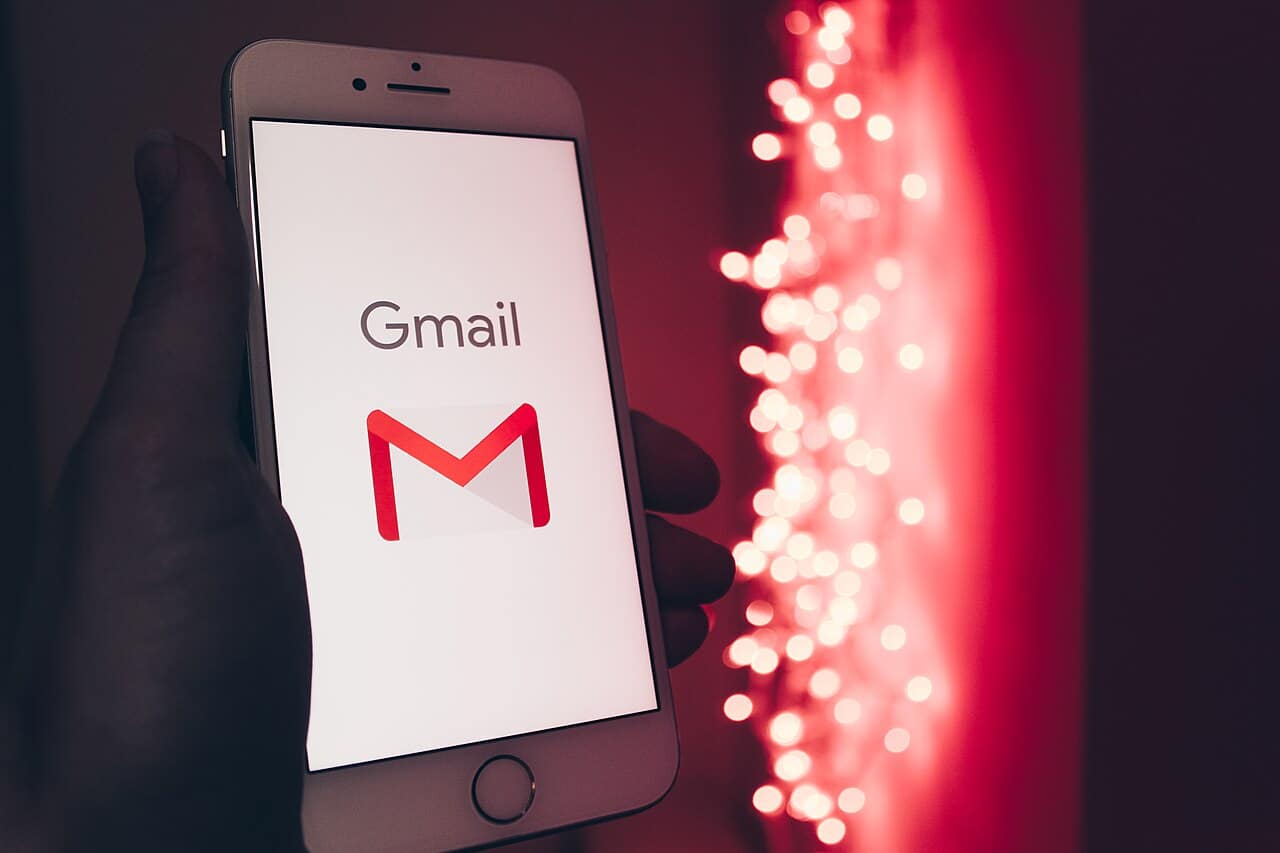
- The spam filter is the best in the business, and it improves because Google reads an enormous amount of mail.
- The app is already on every phone, including the phones your staff actually use.
- Search is instant, even across ten years of mail, which no webmail client I have used matches.
- Uptime is close to absolute, and outages make news.
- Collaboration comes free with the paid tiers — shared calendars, documents, video.
If your business runs on shared spreadsheets and video calls with clients abroad, Google Workspace earns its per-seat price. That is a real answer, not a compromise.
The trap is choosing free Gmail for a business that sells to institutions. Deliverability, not features, is what breaks first.
Where your own domain wins
These are the four reasons I keep recommending business email on your own domain to Kenyan SMEs, in the order they matter.

Trust at the point of payment. A customer deciding whether to send M-Pesa to a stranger reads the email address before the invoice. `accounts@yourbusiness.co.ke` answers a question that `yourbusiness01@gmail.com` raises.
Portability. Your address belongs to your domain, not to a provider. If you move host, the mailboxes move with you and no customer ever learns your provider changed. With a Gmail address, Google owns the identity.
Cost that does not scale per head. Ten staff can have ten branded mailboxes without ten seats. Aliases like `support@`, `billing@` and `careers@` are free and take a minute to add.
Local billing and local support. An invoice in shillings, paid by M-Pesa, with a phone number that answers on a Saturday. That matters more to a Kenyan SME than most comparison articles admit.
There is a fifth, quieter one. Business email in Kenya that sits on your own domain survives staff turnover. When the person who “owned” the Gmail account leaves with the password, you do not lose the address.
The setup most businesses should actually run
The good news is that business email does not force a choice between a branded address and a good inbox. The setup I recommend to almost every SME is a hybrid.
- Host the mailbox on your domain with a local provider — Ksh 599 a year, or included with hosting.
- Set SPF, DKIM and DMARC at signup. Ask for confirmation in writing; this is the step providers skip.
- Connect that mailbox to the Gmail app over IMAP, so staff keep the interface they know on their phones.
- Send all mail through your domain’s SMTP, never through Gmail’s servers, so alignment stays intact.
- Keep one Google account for Drive and Docs if the team needs it, but not as the sales address.
That gives you branded sending, Gmail’s app, and no per-seat charge for people who only need a mailbox.
Which one fits your situation
| Your situation | Sensible choice |
|---|---|
| Solo trader, local customers, first year | Branded mailbox, Ksh 599. Skip Workspace. |
| 3–10 staff, quotes and invoices daily | Branded mailboxes on shared hosting, one per role |
| Agency working in shared docs with clients | Workspace for collaborators, branded alias for sales |
| Shop sending order confirmations | Branded mailbox plus SMTP from your site, never a free address |
| NGO or school writing to institutions | Branded mailbox with all three DNS records verified |
Notice that Gmail as a brand address appears nowhere on that list. It is a fine inbox. It is a poor letterhead.
Five mistakes I see every month
- Using free Gmail as your business email. It survives the first sale and costs the second.
- Forwarding the domain to Gmail instead of hosting it. Mail is sent as Gmail, so it is filtered as Gmail.
- Sharing one mailbox across the team. No accountability, no way to know who promised what.
- Skipping DMARC because “SPF is enough”. It is not, and the failure is silent.
- Letting the developer own the DNS. You should hold the registrar login, not borrow it.
The short version
Business email vs Gmail is really a question about what you are buying. Gmail buys you a superb inbox for free. A branded mailbox buys you an address customers trust, that you can move, that does not bill per person.
If your customers are consumers paying small amounts, a branded mailbox is enough. If you sell to companies, banks or county governments, cheap-looking business email is not optional.
Setting up branded email takes an afternoon, not a week. Business email hosting starts at Ksh 599 a year, and it is included on every shared hosting plan alongside a free `.co.ke` in year one.
If you are choosing a host at the same time, read what web hosting really costs in Kenya first. The email decision is easy once the host decision is settled.
Frequently asked questions
Can I use Gmail with my own domain for free? Only through the “Send mail as” workaround, and that breaks SPF alignment, so institutional recipients may reject or filter it. A hosted mailbox on the domain is the supported route and costs far less than a workspace seat.
Is a business email address in Kenya expensive? No. Business email in Kenya starts at Ksh 599 a year for an ad-free mailbox with unlimited accounts, and shared hosting from Ksh 1,999 includes mailboxes. The domain is the bigger line at about Ksh 999 a year.
Do I need Google Workspace if I already have branded email? Only if the team needs shared documents, video calls and cloud storage. Otherwise a branded mailbox connected to the Gmail app covers daily sending and receiving.
What happens to my email if I change hosting providers? Nothing, if the mailbox is on your own domain. Your provider hands over the mailboxes and DNS records, and addresses stay the same. That is the main reason not to build a business identity on a free Gmail address.
Will branded email stop my invoices going to spam? It is the prerequisite, not a guarantee. With SPF, DKIM and DMARC in place, and a link-light invoice mail, the inbox rate improves sharply. A free address cannot clear that bar at all.
Related reading
- How to register a .co.ke domain in Kenya — the registrant fields that decide who really owns the name.
- Moving hosting without downtime — how mailboxes and DNS travel with the site.
- Web hosting prices in Kenya 2026 — every provider’s fee, including renewals.